
ULAANBAATAR’S ECO-DISTRICT
Capital Region
Mongolia
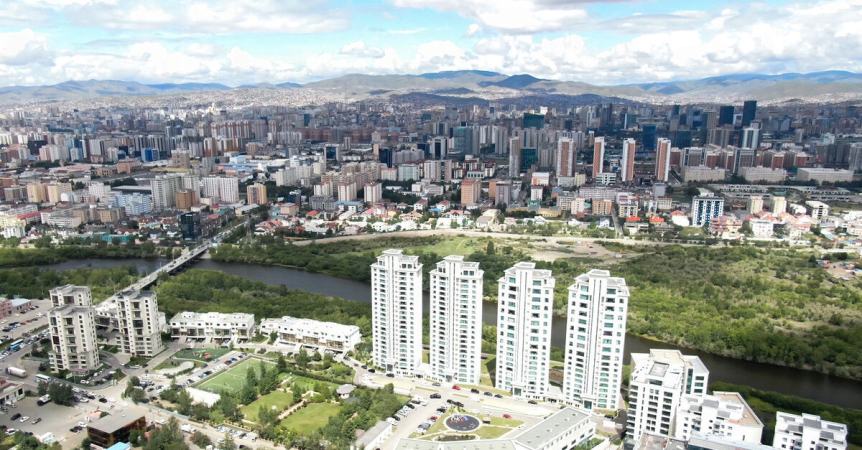
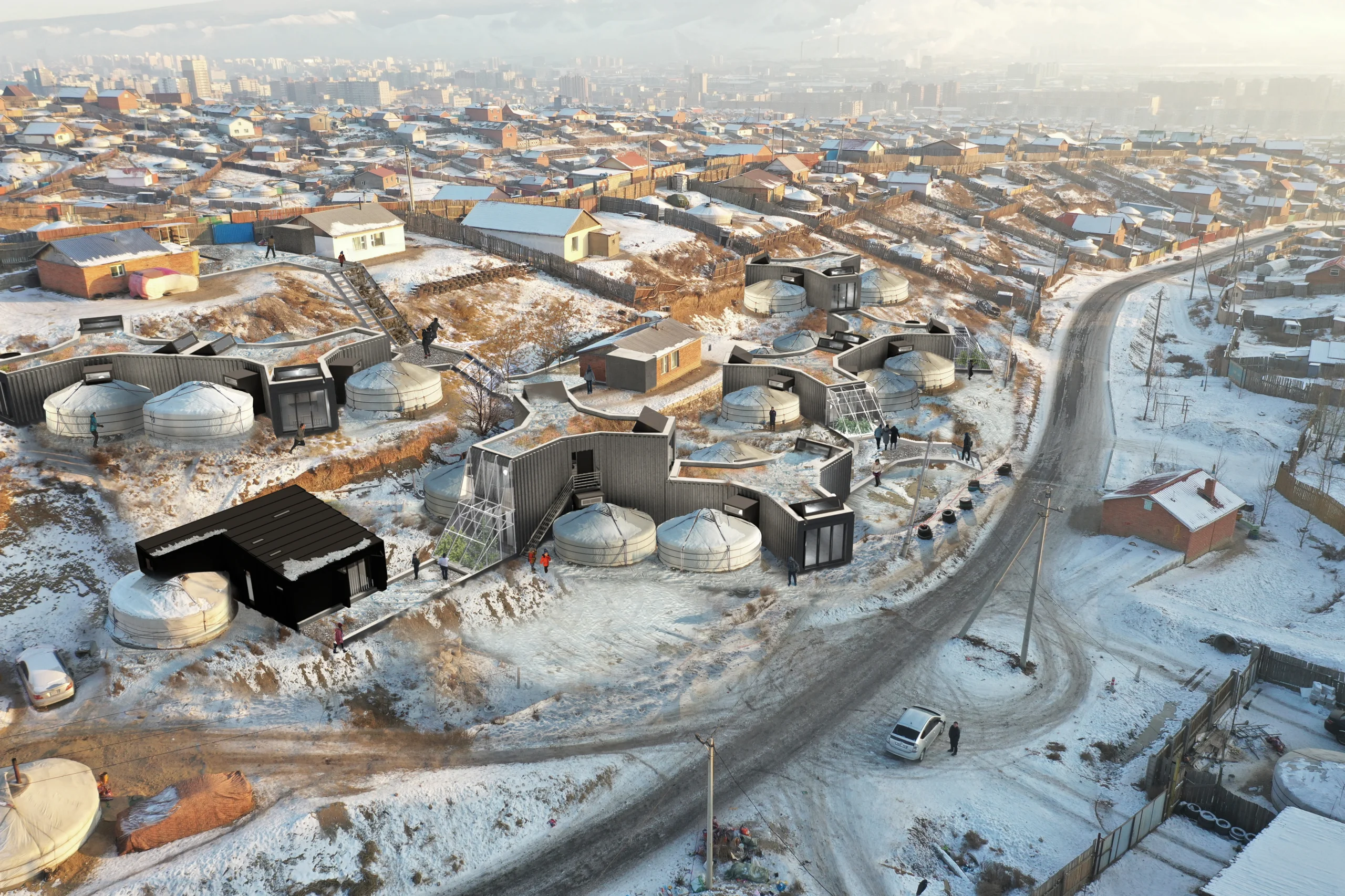
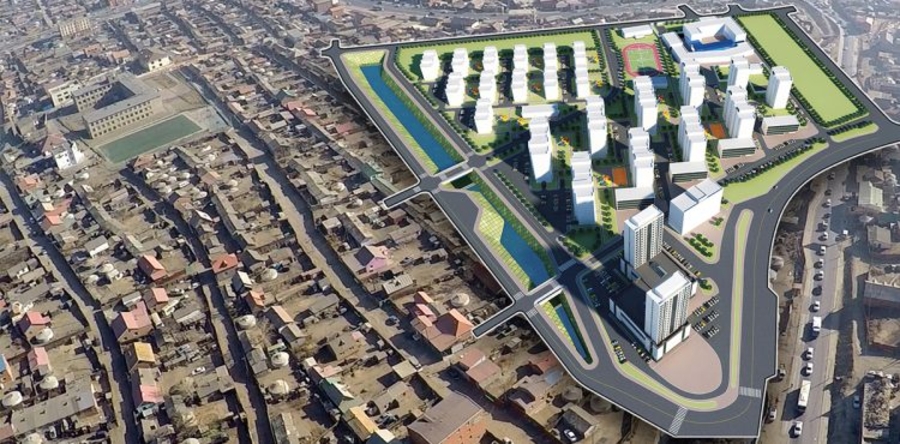
Ulaanbaatar’s eco‑districts programme is transforming informal ger areas into compact, serviced, and climate‑resilient neighbourhoods through green affordable housing, modern infrastructure, and community‑centred planning. Around 60% of Ulaanbaatar’s residents live in ger areas with limited access to heating, water, sanitation, and transport, contributing heavily to winter air pollution and social vulnerability. The city, supported by partners such as the Asian Development Bank (ADB), UN‑Habitat, and others, is implementing a long‑term strategy to upgrade these areas into planned eco‑districts integrated with the formal city.
The Ulaanbaatar Green Affordable Housing and Resilient Urban Renewal Project (AHURP) is redeveloping about 100 hectares of ger areas into roughly 20 eco‑districts, delivering around 10,000 green, affordable housing units for about 100,000 people. Pilot eco‑districts in Selbe and Bayankhoshuu combine new housing with roads, district heating, water and sewerage networks, public transport, green spaces, and social facilities.
Future Cities criteria compliance
Environmental & Nature
Compact redevelopment and green construction are expected to cut emissions by about 7.9–8 million tonnes of CO₂ equivalent over 40 years, while sharply reducing black‑carbon pollution. Each eco‑district reserves significant land for public and green space, urban agriculture, and climate‑resilient infrastructure such as improved drainage and road upgrades.
Smart City
Eco‑districts use energy‑efficient building design, district heating, and green building standards (including EDGE certification), plus solar PV to offset part of building energy demand. Programmes promoting efficient stoves and home retrofits further reduce coal use and improve indoor comfort in ger areas.
Human-Centric
Ger‑area upgrading is explicitly pro‑poor and participatory, improving access to decent housing, services, and jobs for low‑income households. New eco‑districts cluster schools, health centres, shops, and parks within walking distance, reducing travel burdens and enhancing daily quality of life.
Interesting Links
Links to external websites and video features available for cities and developments that apply and are accepted as Official Participants: click here to apply