
PORT LANDS / VILLIERS ISLAND
TORONTO, ONTARIO
Canada
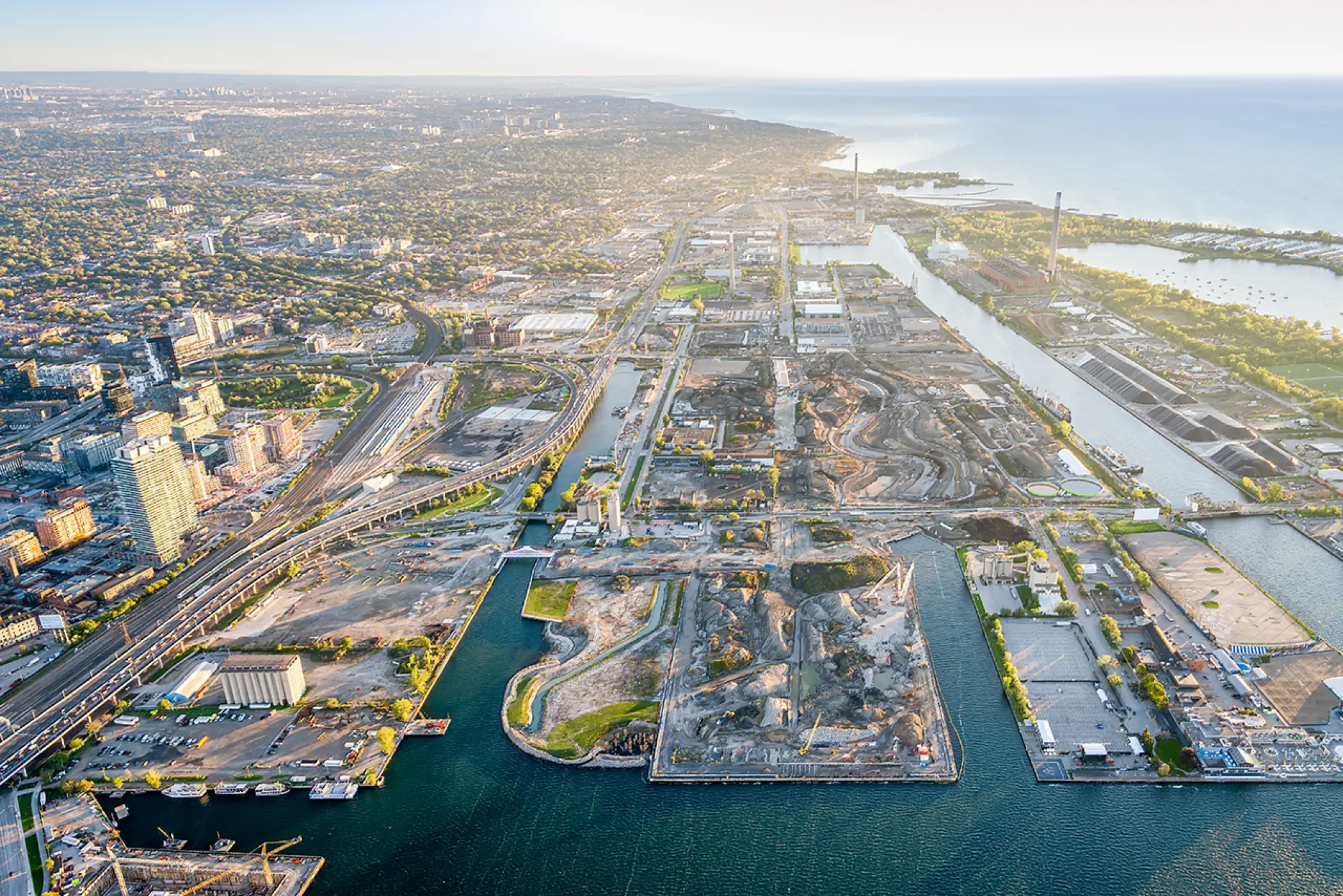
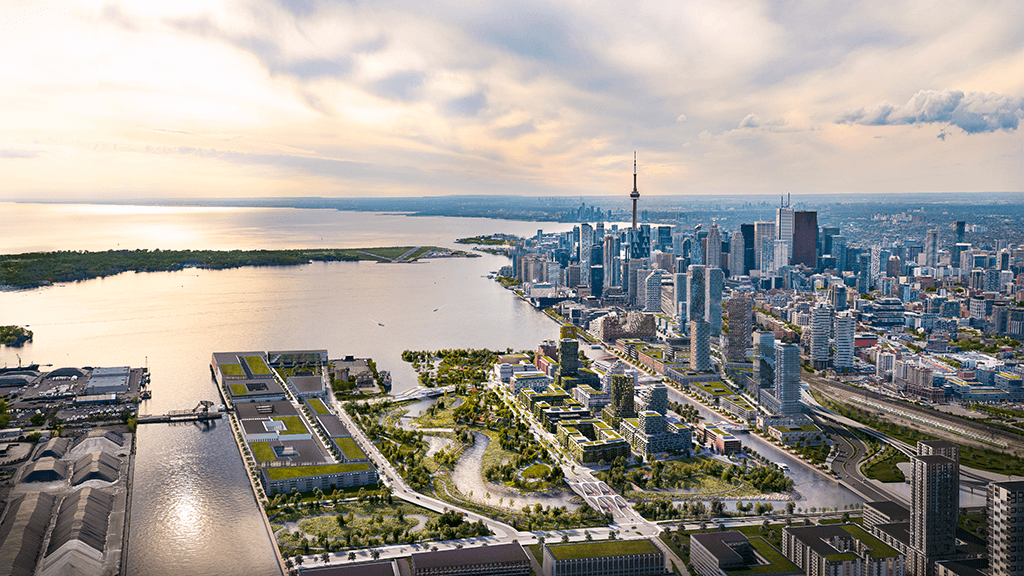
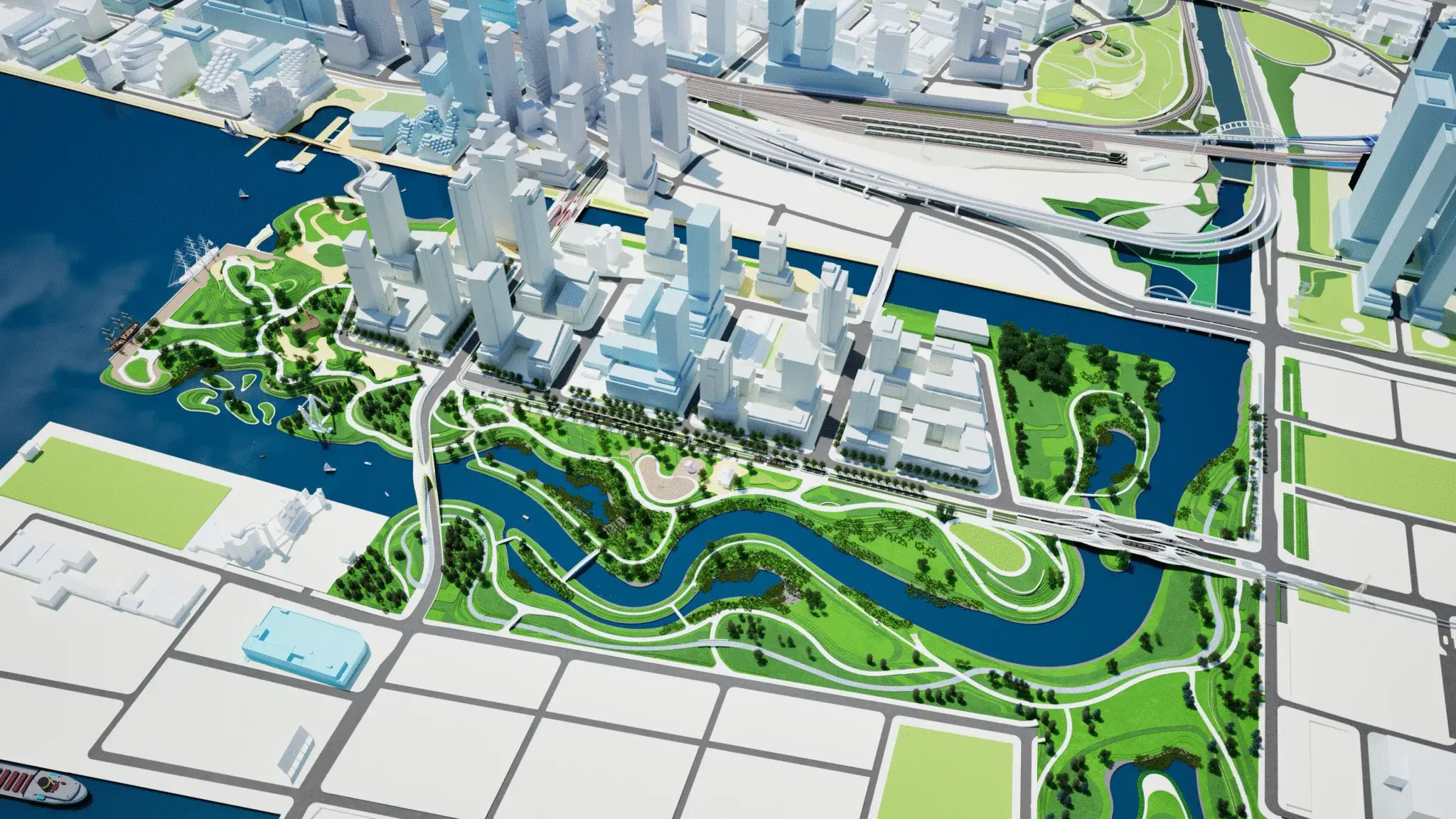
Toronto’s Port Lands is a major urban revitalization project transforming approximately 355 hectares of underutilized industrial land southeast of downtown Toronto into a sustainable, resilient mixed-use community. Central to this initiative is the creation of Villiers Island, now known as Ookwemin Minising, a newly formed island created by the re-naturalization of the Don River’s mouth.
It is situated at the meeting point of the Don River, Inner Harbour, and Keating Channel. Its land use plan integrates residential, commercial, institutional, and recreational areas designed to accommodate around 15,000 residents and workers in a walkable, transit-focused community. The transformative project, led by Waterfront Toronto combines advanced flood protection infrastructure with environmental restoration and innovative urban design to establish one of Canada’s first climate-positive neighbourhoods and to provide critical flood resilience for the eastern downtown core.
Future Cities criteria compliance
Environmental & Nature
The project prioritizes climate resilience and ecological restoration, it embeds sustainability and resilience at its core, using the naturalized Don River as a nature-based flood protection system that also restores habitats. With green infrastructure, low-carbon buildings, and a circular water system, it targets LEED Gold Neighbourhood certification, setting a new standard for climate-resilient urban design.
Smart City
The focus is on future-proofed, resilient foundational infrastructure by using advanced engineering and environmental technologies, including an intelligent watershed system with floodable riverbanks, sustainable urban drainage (SUDS), and district energy solutions. Guided by climate-positive design standards, it integrates digital modelling to build a resilient, future-ready neighbourhood.
Human-Centric
The precinct plan prioritizes a mixed-use, inclusive community with a strong emphasis on public realm quality. Design principles include diverse housing options, affordable housing targets, preservation of heritage buildings, and a multi-modal transportation network that supports walking, cycling, and transit. Public parks and waterfront amenities contribute to an inviting, year-round community atmosphere.
Interesting Links
Links to external websites and video features available for cities and developments that apply and are accepted as Official Participants: click here to apply