
MARETERRA
MONACO
Monaco
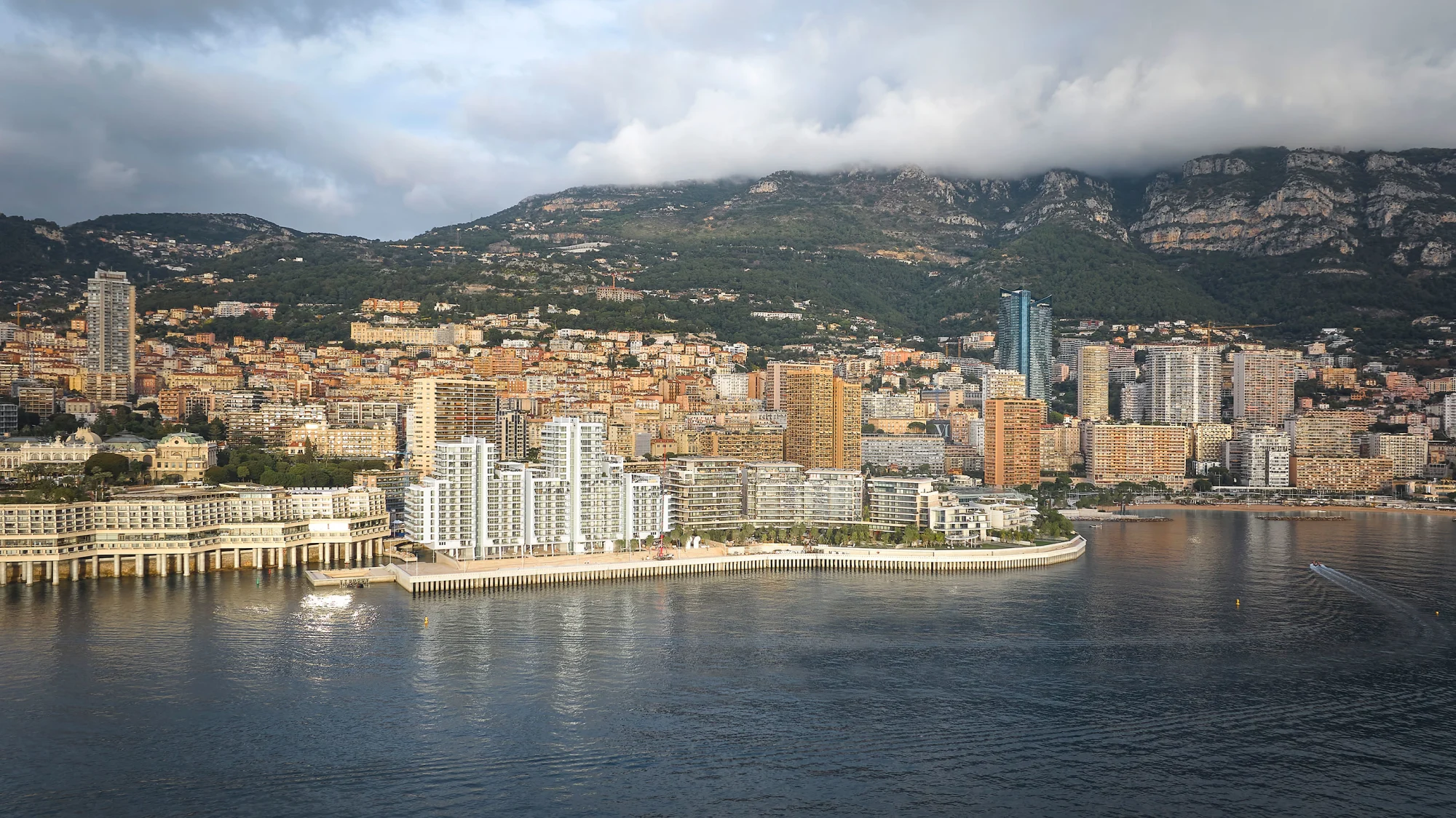
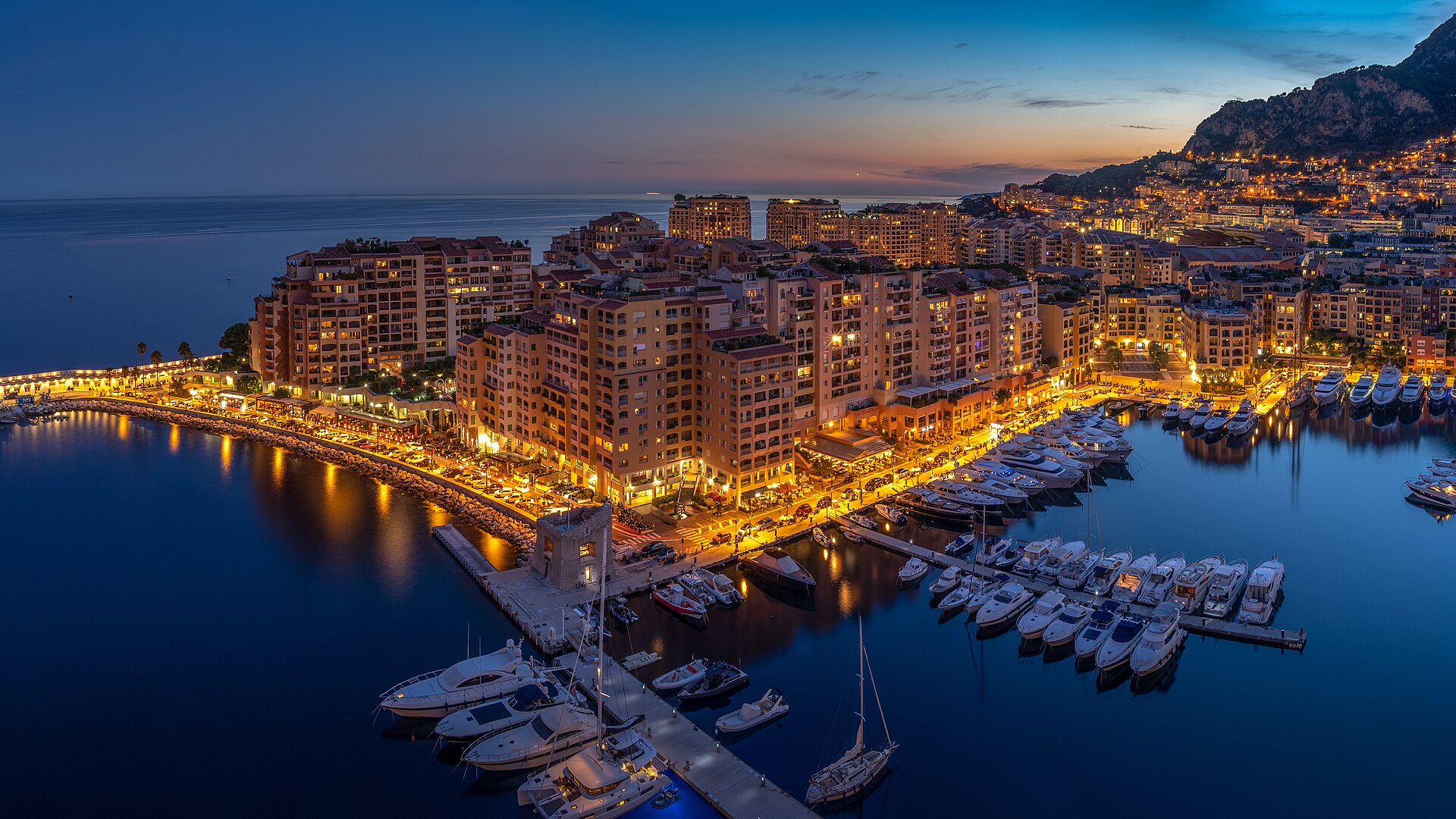
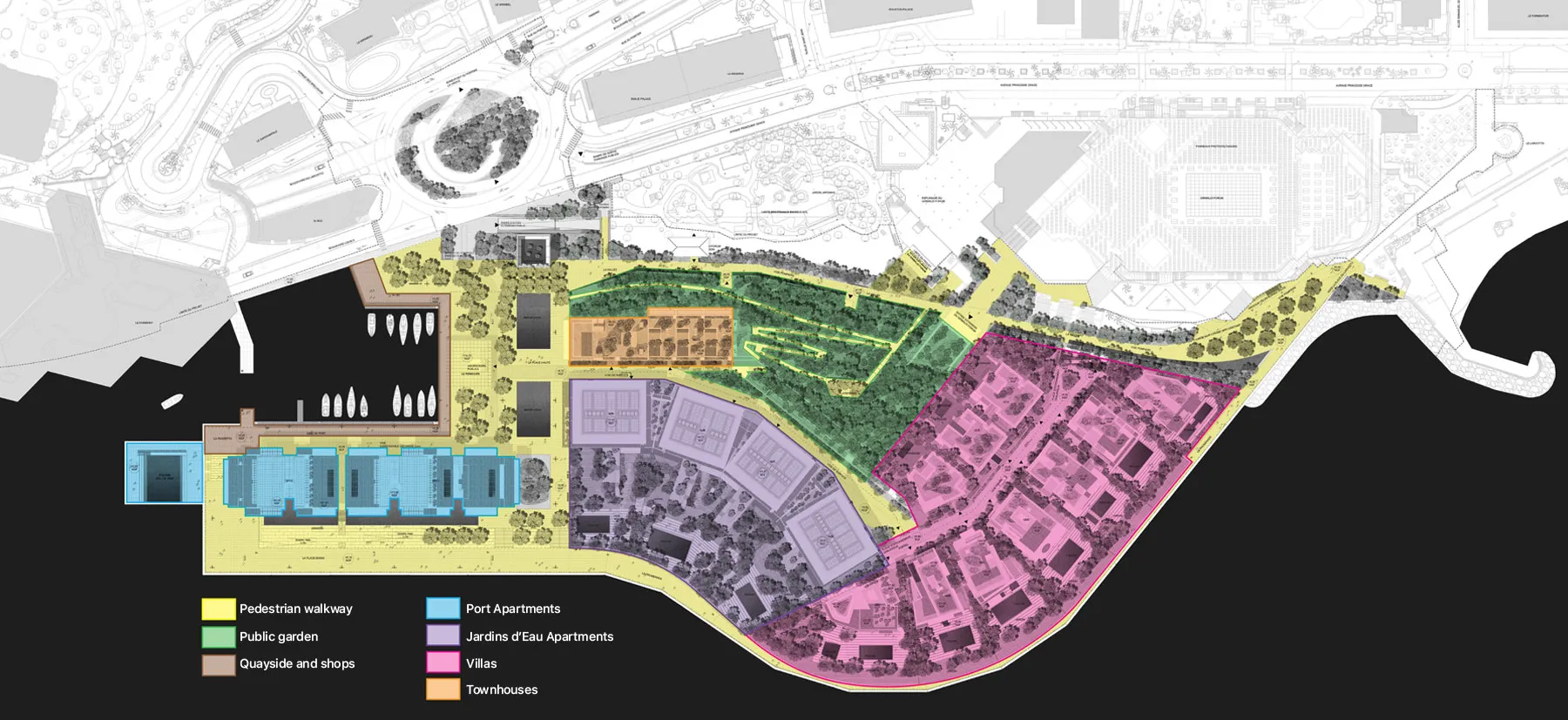
Monaco, one of the world’s smallest and most densely populated countries, has adopted land reclamation as a vital strategy to expand available land while maintaining high environmental standards. The Mareterra project represents the latest and largest territorial extension, reflecting the Principality’s commitment to sustainable urban growth. With its distinctive curved coastline, gently rising hillside, and native flora, Mareterra forms a vital new waterfront connection for the people of Monaco, from Port Hercule to Larvotto beach.
Monaco is the world’s second-smallest independent state with an extremely limited land area of 2.08 sq km. To overcome this, the Principality has historically relied on land reclamation from the Mediterranean Sea. The latest and most significant project is the €2 billion Mareterra (Portier Cove) extension, which adds six hectares to the territory. Overseen by H.S.H. Prince Albert II, this project is not merely an expansion but a meticulously planned “eco-district” designed to adhere to the highest international standards of sustainability and environmental protection.
Future Cities criteria compliance
Environmental & Nature
Land reclamation incorporates eco-friendly design principles with a focus on increasing green spaces (20% of the territory), water conservation, organic landscaping, recycling initiatives, and biodiversity restoration. The government’s marine conservation strategy, relocating sea species and designing caissons to support marine colonization, demonstrates a strong commitment to ecological resilience in Monaco.
Smart City
Monaco adopts smart city technologies, including solar energy systems, extensive EV charging infrastructure, automated pedestrian links, and digital traffic flow management to optimize urban living. Initiatives under the “Extended Monaco” digital program include pilot projects for e-mobility (such as self-driving electric shuttle buses), smart bus stops with real-time information, and the integration of new technologies like greywater recycling stations (developed by a Monegasque start-up) for water preservation.
Human-Centric
Urban planning emphasizes pedestrian-friendly streets, accessible public parks, and cultural venues, creating safe, vibrant public life with easy access to amenities and transport, all while preserving quality of life in this dense city-state. Beyond luxury housing, recent housing policy reforms aim to expand availability for Monegasque nationals, reinforcing a balanced, people-centred urban model.
Interesting Links
Links to external websites and video features available for cities and developments that apply and are accepted as Official Participants: click here to apply