
KALASATAMA
HELSINKI
Finland
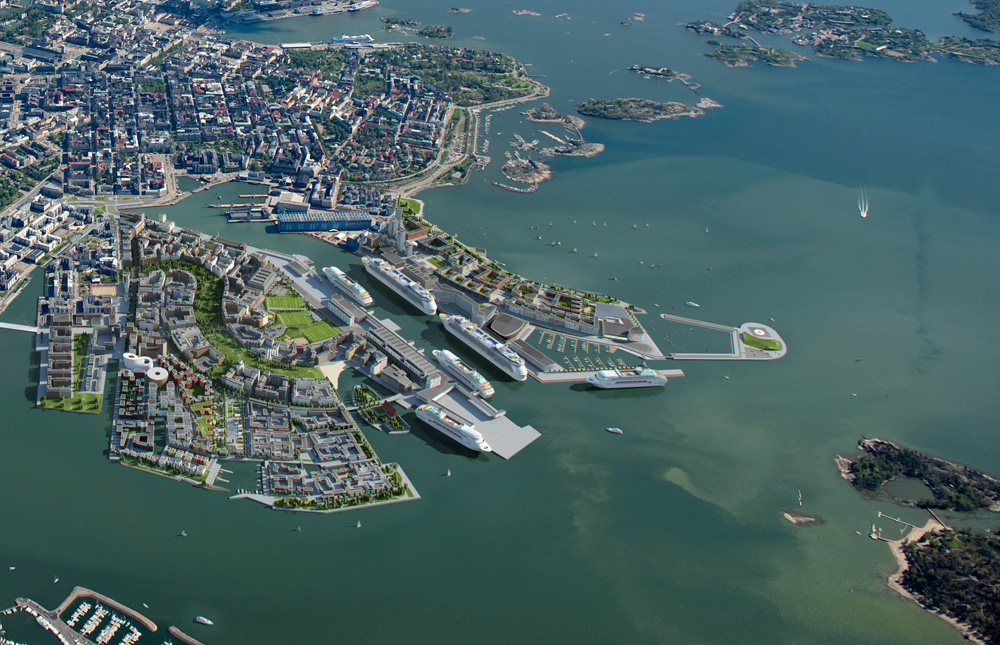
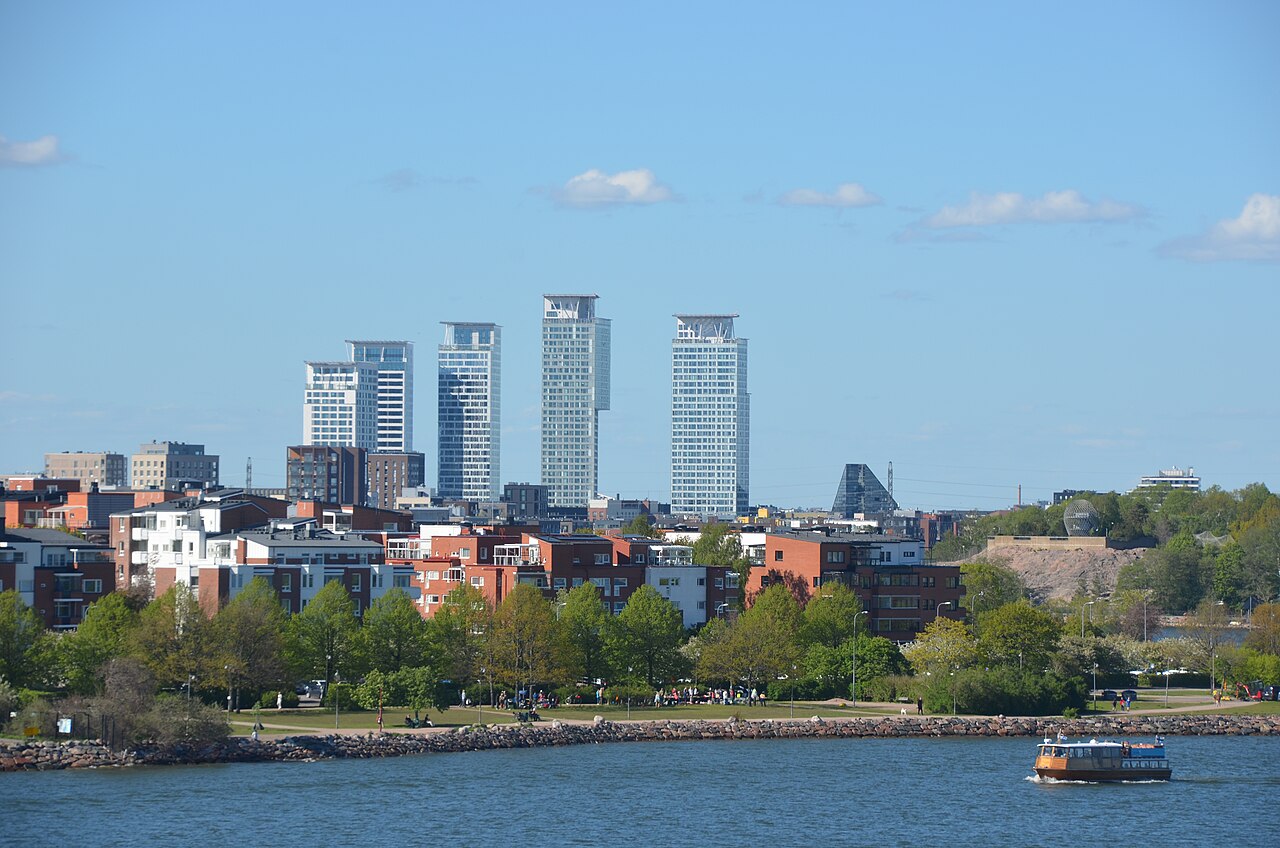
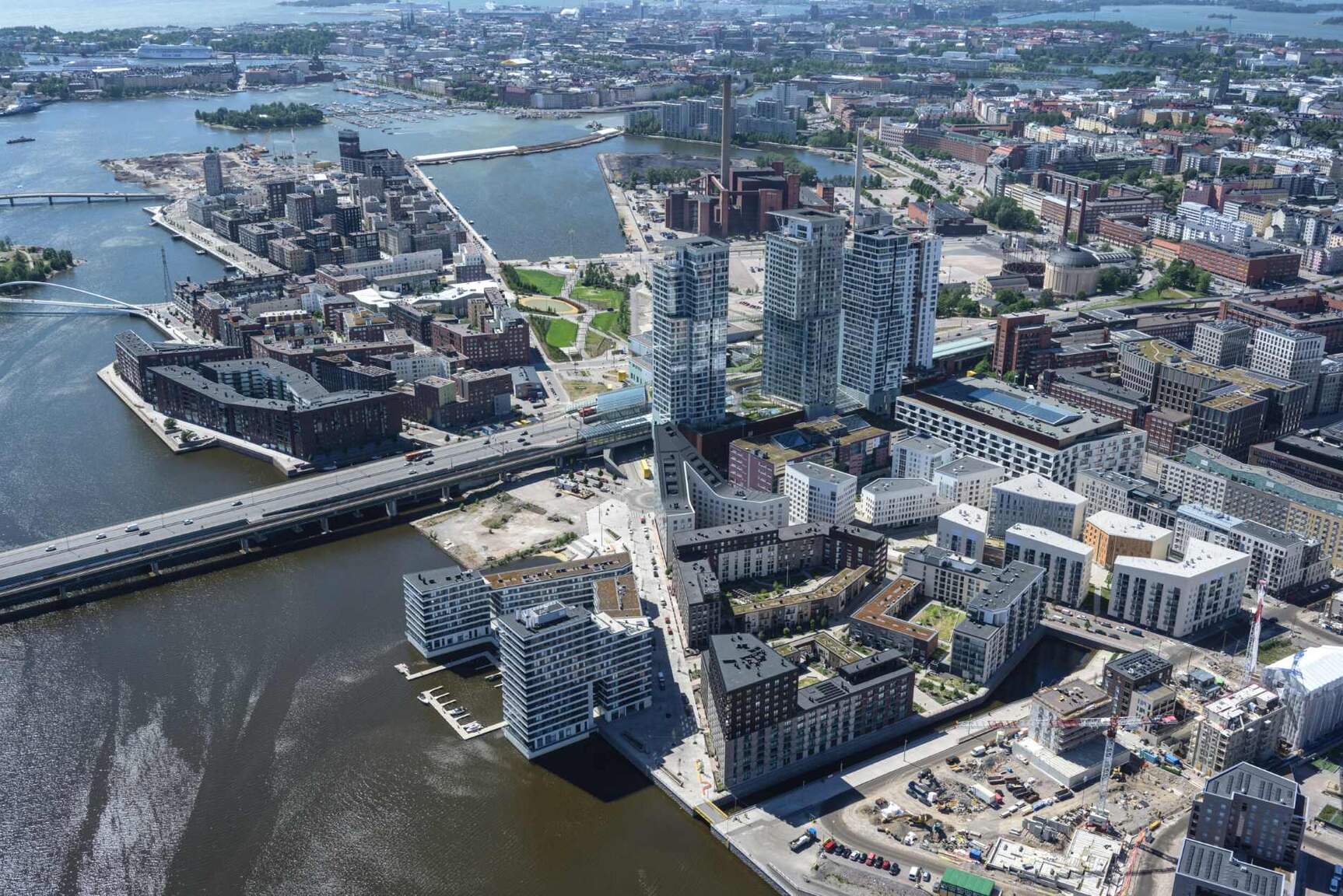
Kalasatama (“Fish Harbour”) is one of Helsinki’s largest urban development projects, transforming a 170-hectare former port and industrial area into a new residential and business district in the eastern part of the inner city. This waterfront regeneration district in eastern Helsinki is been transformed into a dense, mixed-use urban quarter with apartments, services and excellent public transport connections. The area is planned to host thousands of new homes, a continuous coastal route and strong links to surrounding green and recreational spaces (including the Isoisänsilta pedestrian bridge to Mustikkamaa).
It is located a little more than one kilometre north from the coastal centre of Helsinki, near the district of Hakaniemi, and the east side of Kalasatama borders the sea. Itäväylä, which leads in the direction of East Helsinki. The development, primarily coordinated by the City of Helsinki and its innovation company Forum Virium Helsinki, is globally recognized as a leading Urban Living Lab dedicated to co-creating innovative services with residents and businesses. By 2035, the district is planned to be home to approximately 25,000 residents and provide 10,000 jobs.
Future Cities criteria compliance
Environmental & Nature
Kalasatama models Helsinki’s goal to become a carbon-neutral city by 2035. The sustainability strategy involves transitioning to renewable energy sources like solar power and connecting to an energy-efficient district heating and cooling grid that recovers waste heat. The development emphasizes resource-efficient solutions and promotes the circular economy. Ecological features include an “Edible Park” with smart lighting and the development of a waterfront route.
Smart City
It utilizes advanced Information and Communication Technologies (ICT) and data solutions to optimize resource use. The district has an eco-friendly energy grid with smart meters in all new homes to provide real-time consumption data. Key innovations include piloting autonomous electric shuttles for “last-mile” transport and an Automated Waste Collection System (AWCS), which uses a vacuum-based, underground pipeline to minimize emissions from garbage trucks.
Human-Centric
The core human-centric vision is to give residents “one hour more a day” of free time through efficient services. Kalasatama acts as a “living lab” where about a third of residents have actively co-created solutions through agile pilots and workshops.
The district prioritizes accessibility and inclusive services, featuring a Health and Wellbeing Centre for digital health, a “future school” designed as a community hub, and a Co-Created Senior House. Technology like the Mobility-as-a-Service (MaaS) platform is used to make travel effortless.
Interesting Links
Links to external websites and video features available for cities and developments that apply and are accepted as Official Participants: click here to apply