
ECO-VIIKKI
HELSINKI
Finland
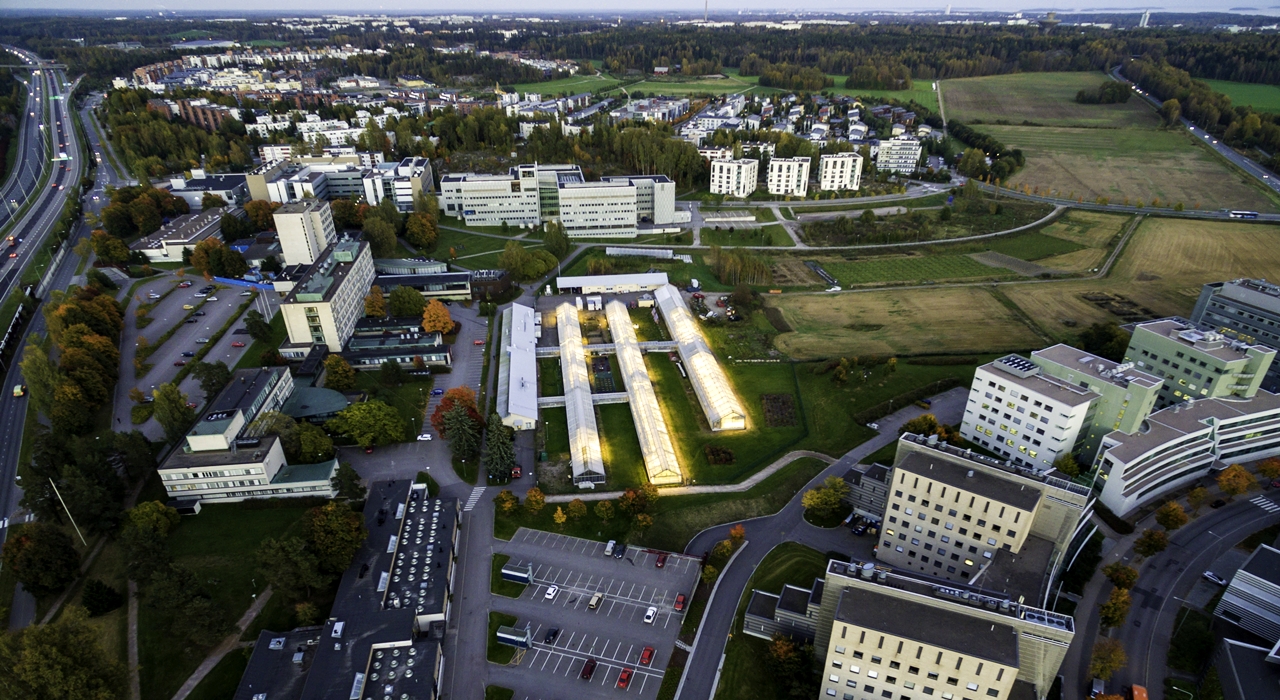
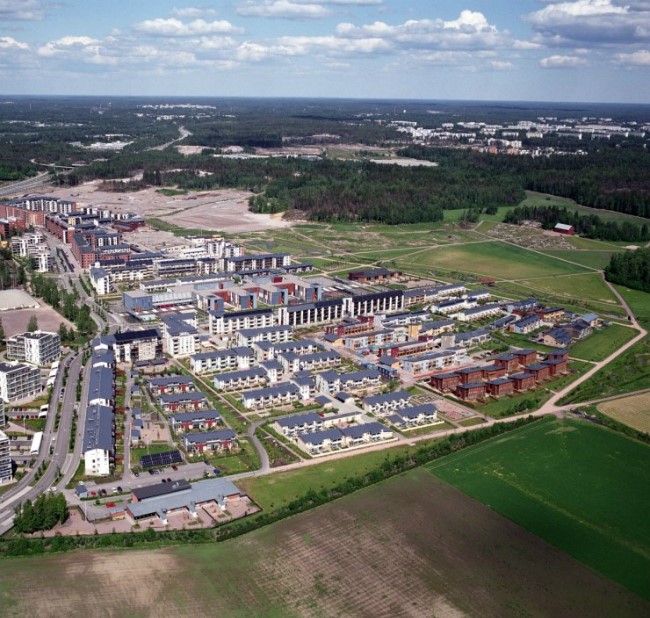
Eco‑Viikki is part of the Viikki district, about 7–8 km north‑east of central Helsinki, next to the Viikki Science Park and nature reserve. Planned in the 1990s and built mainly between 1998 and 2003, it was designated as Helsinki’s pilot “eco‑community” and ecological housing area. The City of Helsinki presents Eco‑Viikki as the first ecologically planned district in Finland, with planning based on sustainable, healthy, and economically viable solutions. The neighbourhood has been included in international ecological‑district case collections and has received recognition for its pioneering role.
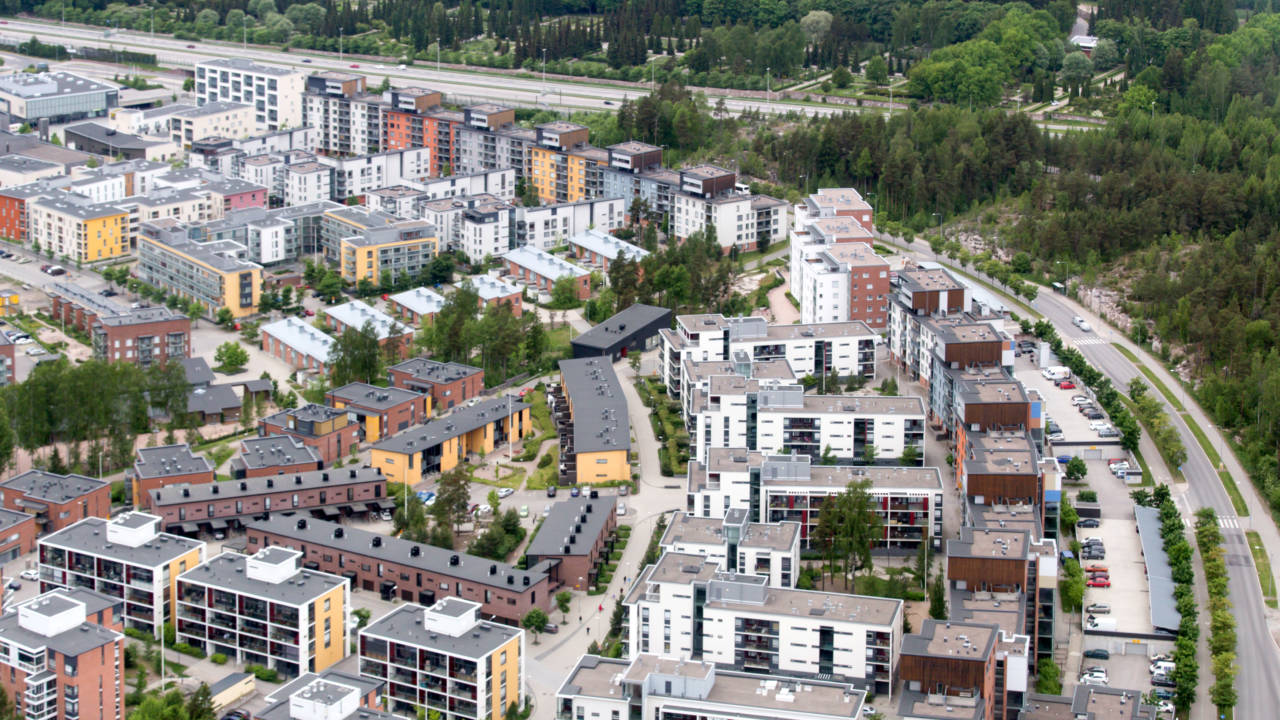
Eco‑Viikki’s urban form uses a finger‑like structure, where south‑facing housing blocks alternate with green “fingers”, cultivated plots, and sheltered courtyards. A vegetation belt on the edge of open fields reduces wind, while building orientation maximises solar gains. The area provides housing for roughly 1,800–1,900 residents and around 60,000–64,000 m² of floor space within the wider Viikki masterplan of housing, science park, services, fields, and nature conservation. Public functions such as day‑care, a teacher‑training school, and parks were designed with ecological criteria and everyday community use in mind.
Future Cities criteria compliance
Environmental & Nature
Eco‑Viikki was planned as an ecological housing area of international importance, aiming to minimise environmental impacts over building life‑cycles and everyday practices. Helsinki highlights Eko‑Viikki as a climate‑smart planning example built on sustainable, healthy, and economically viable solutions. Stormwater is handled through area‑wide systems and local features such as open channels and ponds, reducing runoff and supporting the adjacent nature reserve. Green “fingers”, orchards, and allotment gardens strengthen biodiversity, offer recreation, and enable small‑scale local food production.
Smart City
Eco‑Viikki hosted Finland’s largest solar‑heating experiment, co‑funded by the EU THERMIE programme. Nine solar‑thermal systems with about 1,246 m² of collectors were designed to cover around one‑third of participating buildings’ heat demand.
Ecological building criteria stricter than normal Finnish regulations set targets for energy, indoor environment, water, and waste. Experimental low‑energy buildings, such as Skanska’s projects and the Mera House, combine high insulation and mechanical ventilation with heat recovery, cutting energy use to roughly 70–80 kWh/m² or below.
Human-Centric
Resident experience and behaviour were central to the concept. Follow‑up studies show high satisfaction and more sustainable habits in energy and water use, as well as recycling, compared with typical housing areas.
Individual metering for electricity and water gave residents direct feedback and incentives to save resources. Planning involved broad cooperation: city departments, researchers, and housing organisations worked together on Eco‑Viikki as a pilot eco‑community. Public spaces, children’s parks, and community gardens were designed as social meeting places, linking ecological themes with daily life.
Interesting Links
Links to external websites and video features available for cities and developments that apply and are accepted as Official Participants: click here to apply