
CIUDAD CAYALÁ
GUATEMALA CITY
Guatemala
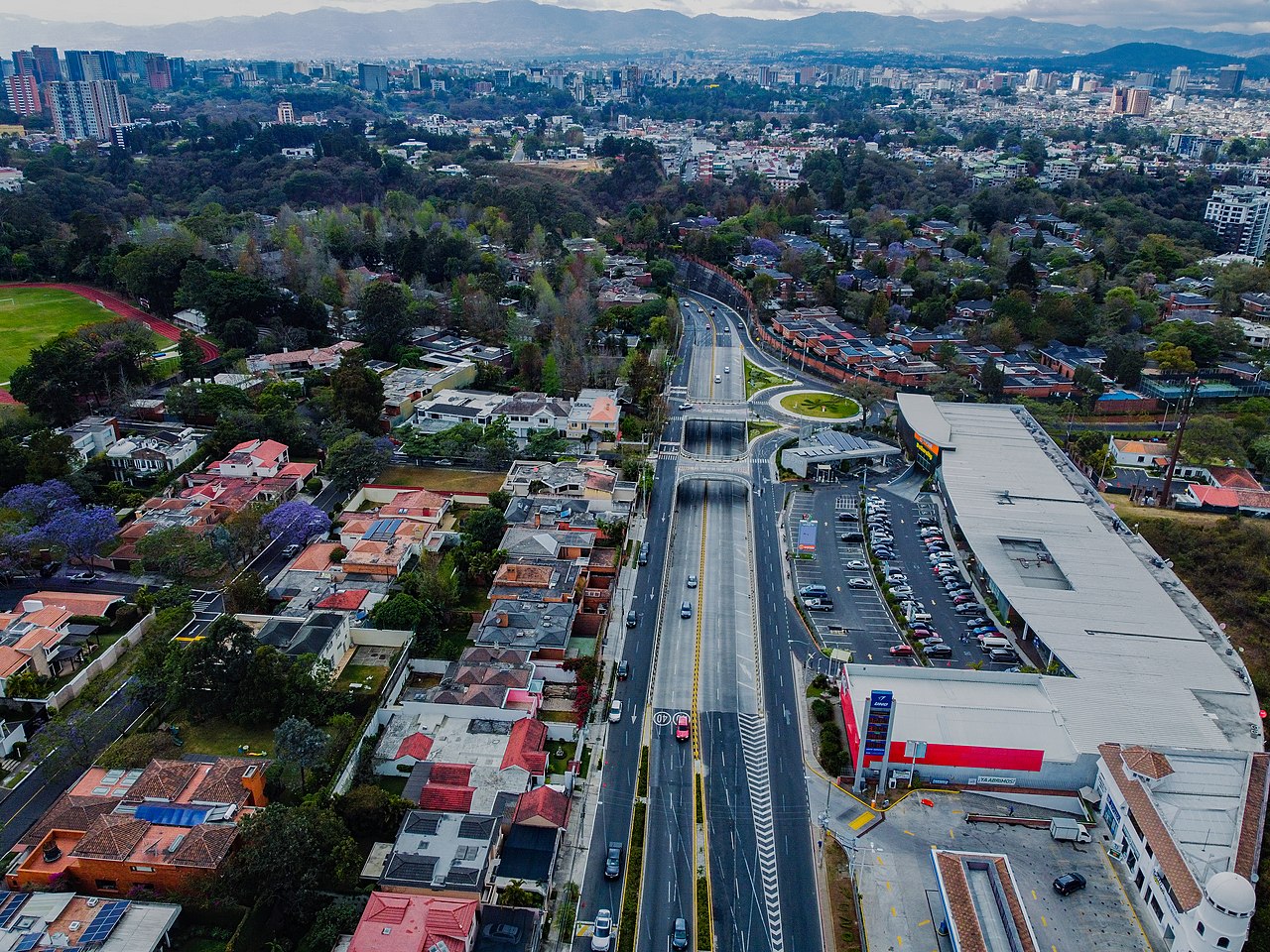
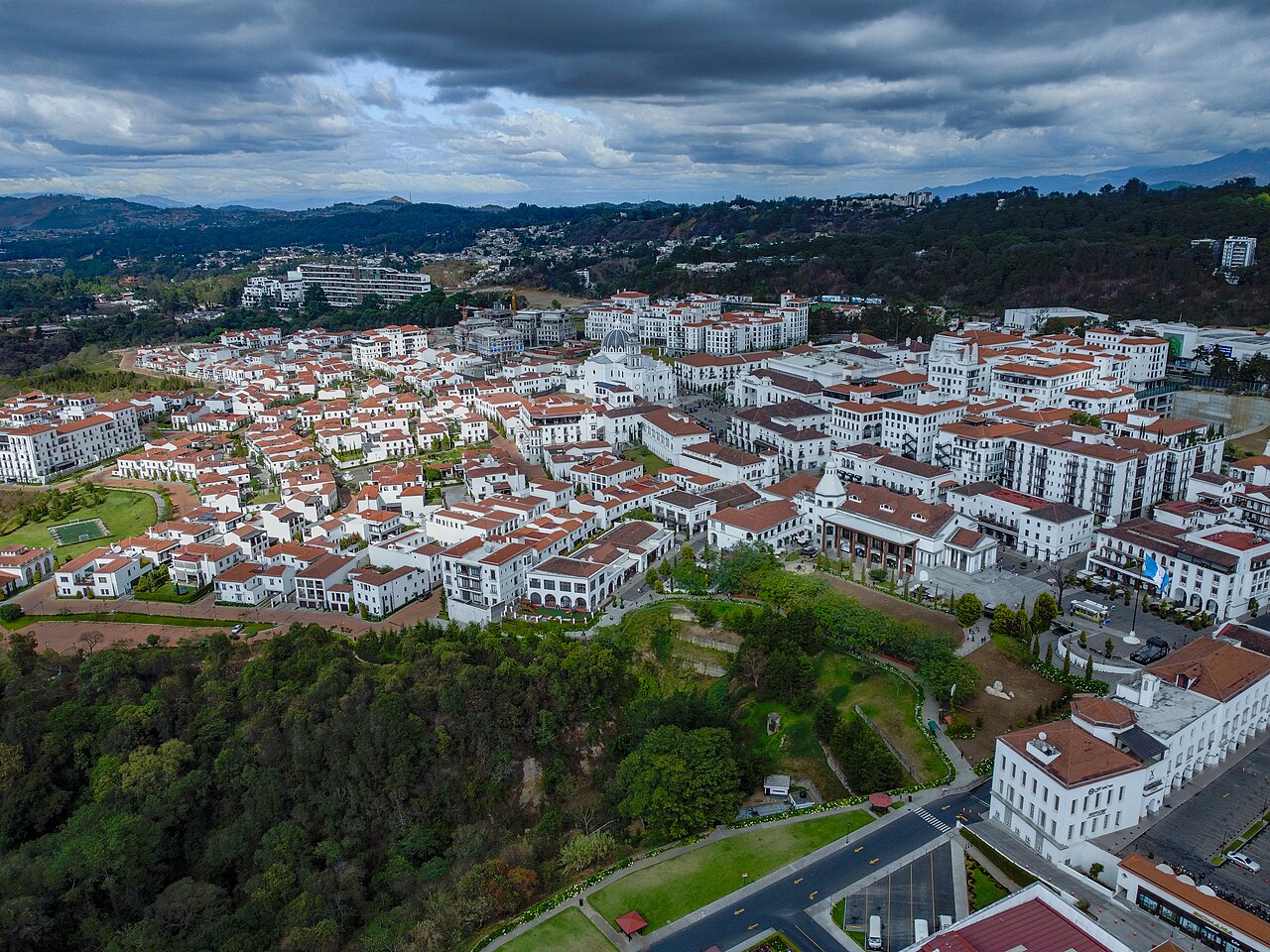
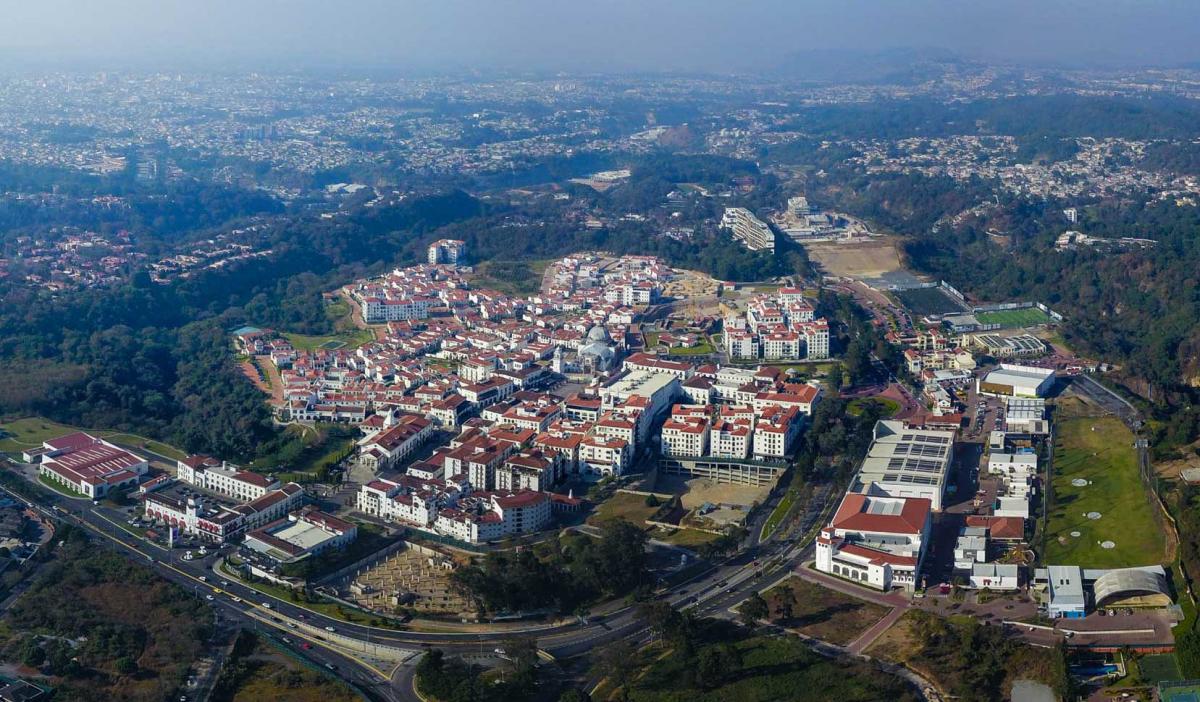
Ciudad Cayalá is a privately developed, master‑planned district in Zone 16 of Guatemala City, designed as a “city within the city” that applies New Urbanism principles with traditional Guatemalan‑Mediterranean architecture. Developed by Grupo Cayalá from the 2000s, it offers a compact, mixed‑use alternative to the fragmented, car‑oriented growth common in the wider metropolis. It was conceived to demonstrate a different urban model for Guatemala City: dense, walkable, mixed‑use, and oriented around high‑quality public spaces rather than highways and gated enclaves. Its image as a safe, attractive “city that has everything” has turned it into a regional reference point for private‑led urbanism.
The masterplan, by Léon Krier with local architects, organises Cayalá as a traditional town with a central plaza, church, civic buildings, and arcaded commercial streets framed by 3–6‑storey mixed‑use blocks. The core area of Paseo Cayalá concentrates shops, restaurants, cinemas, offices, hotels, and several hundred homes, while surrounding neighbourhoods connect to a large ecological and sports park that anchors the landscape.
Future Cities criteria compliance
Environmental & Nature
Its main sustainability strategy is urban form: high‑density, mixed‑use fabric and short blocks that enable most daily needs to be met on foot within a compact radius, reducing internal car trips. The adjacent Parque Ecológico Deportivo Cayalá preserves significant woodland and biodiversity, integrating trails and recreation into the urban fabric and limiting land take compared with conventional suburban models.
Smart City
Cayalá integrates modern infrastructure, high‑speed connectivity, underground services, and contemporary building systems to support offices, hospitality, and retail in a seamless way. Digital platforms and social media are central to how the district manages events, marketing, and customer experience, even though visible “smart city” hardware remains discreet.
Human-Centric
Cayalá prioritises public realm and pedestrian comfort, with stone‑paved streets, shaded plazas, colonnades, and a coherent architectural language aimed at fostering sociability and local identity. While praised as a humane, walkable environment and recognised by organisations such as the Congress for New Urbanism, it is also criticised for serving mainly higher‑income users, highlighting ongoing debates about inclusion and equity in Guatemala City.
Interesting Links
Links to external websites and video features available for cities and developments that apply and are accepted as Official Participants: click here to apply