
CALIFORNIA FOREVER
SOLANO COUNTY
United States
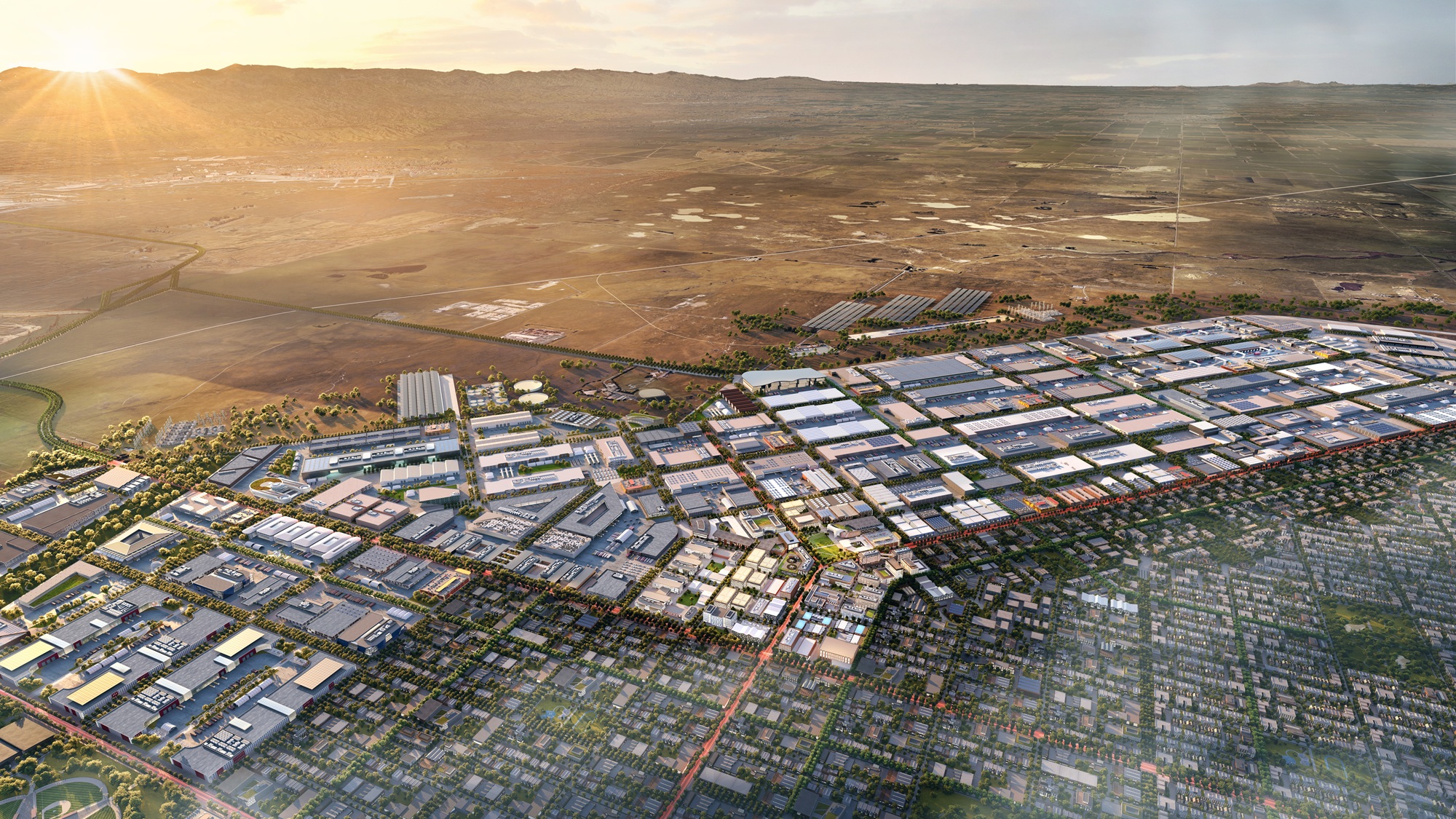
California Forever is a private proposal to build a new master‑planned city in southeast Solano County as a dense, walkable, green alternative to California’s sprawl. It aims to house up to 400,000 residents near Travis Air Force Base, combining housing, jobs, and clean energy in one integrated “next great American city.”
The company, founded by Jan Sramek, has acquired over 65,000 acres and proposes the East Solano Plan on about 17,500 acres between Fairfield, Rio Vista, and Travis AFB. The plan includes a downtown core, industrial and maker districts, surrounding neighbourhoods, and a large share of the land retained in agriculture and conservation. Economic projections highlight more than 12,000 construction jobs, over 53,000 permanent jobs, and roughly $33 billion in regional economic output over 13 years. The project is still in the approvals phase and faces strong debate over land use, water, and governance locally.


Future Cities criteria compliance
Environmental & Nature
California Forever markets the project as “the most sustainable, climate‑resilient city in America,” with very low per‑capita emissions. The plan relies on compact, transit‑oriented growth: relatively high minimum densities and all residents within a short walk of transit. Roughly 4,000 acres are allocated to parks, trails, habitat, and community gardens, within an urban boundary to limit sprawl. Systems are planned around 100% clean energy and extensive water recycling and recharge.
Smart City
“Solano Foundry” is a planned 2,100‑acre, 40‑million‑square‑foot advanced manufacturing park aimed at being the largest in the U.S. It targets advanced transportation, robotics, clean energy, and defence suppliers, co‑locating them with housing. The city is framed as a fully modern, digitally enabled infrastructure platform, with high‑capacity networks and data‑driven utilities designed from scratch.
Human-Centric
The human‑centric goal is to “bring back the California Dream” via attainable homeownership, short commutes, and nearby services. Neighbourhoods are intended to mix housing types and provide early schools and civic spaces, with streets that favour walking and cycling. Local groups such as Sustainable Solano and Solano Together question whether a privately led new city can meet community needs, highlighting concerns about transparency, water, farmland, and long‑term governance.
Interesting Links
Links to external websites and video features available for cities and developments that apply and are accepted as Official Participants: click here to apply