
aspern Seestadt
VIENNA
Austria
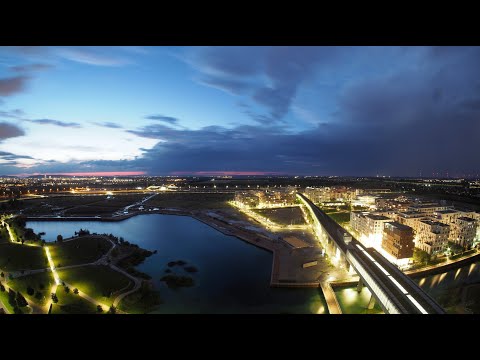
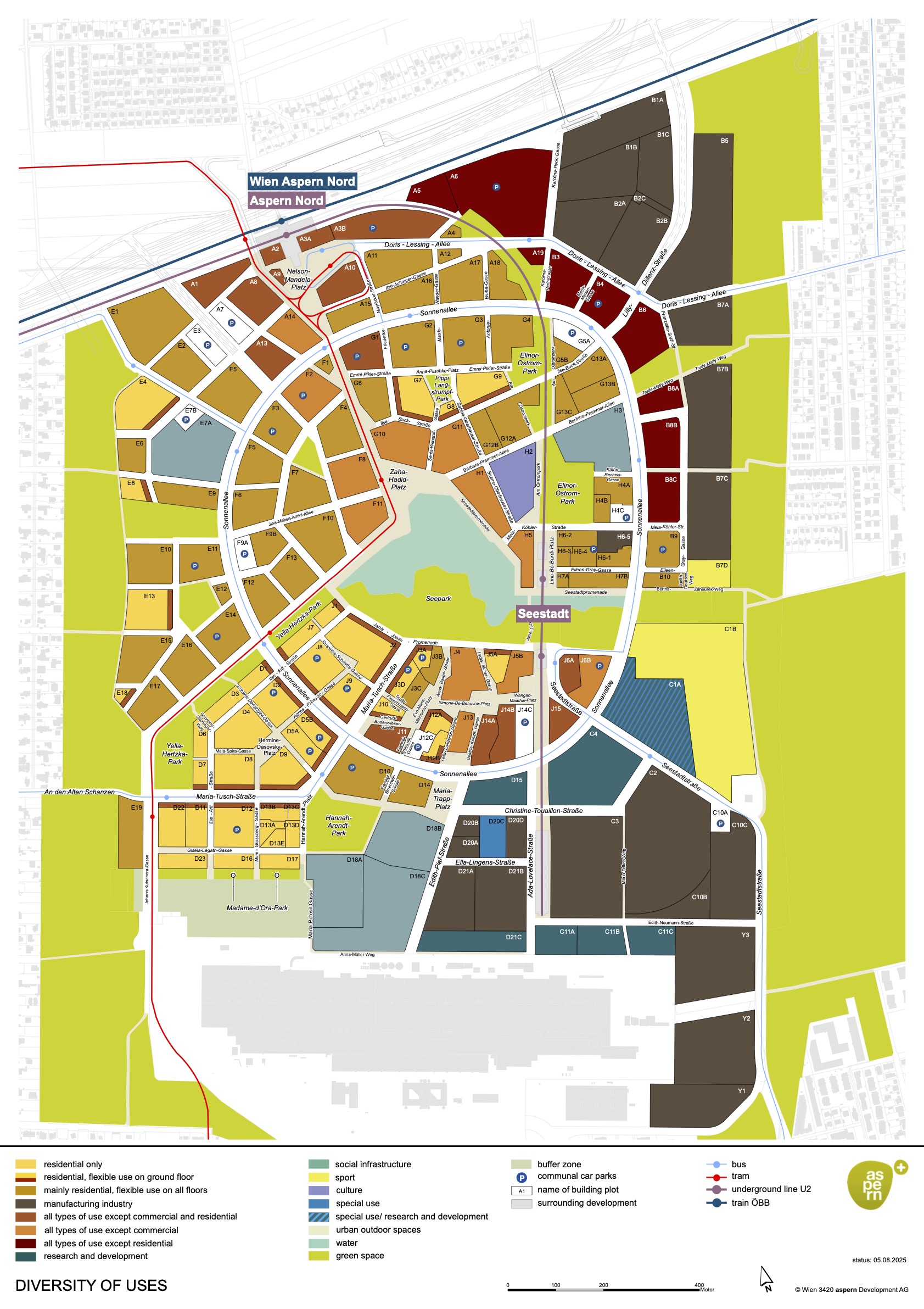
aspern Seestadt is one of Europe’s largest new-urban-development districts, located in the northeast of Vienna (District 22 – Donaustadt). The project spans about 240 hectares and is designed to accommodate over 25,000 residents and more than 20,000 jobs and study-places by the 2030s. Initiated on a former airfield, the masterplan was adopted in 2007 and the area is growing in phases to deliver a unique district, combining high quality of life, strong connectivity, and sustainable infrastructure.
It is situated in northeast Vienna, within CENTROPE region. aspern Seestadt is evolving into a thriving mixed-use community where living, working, culture, and recreation coexist seamlessly. Strategically located with direct access to the U2 subway line and excellent connections to public transport in general, it serves as both a vibrant residential neighbourhood and an international business hub.
Future Cities criteria compliance
Environmental & Nature
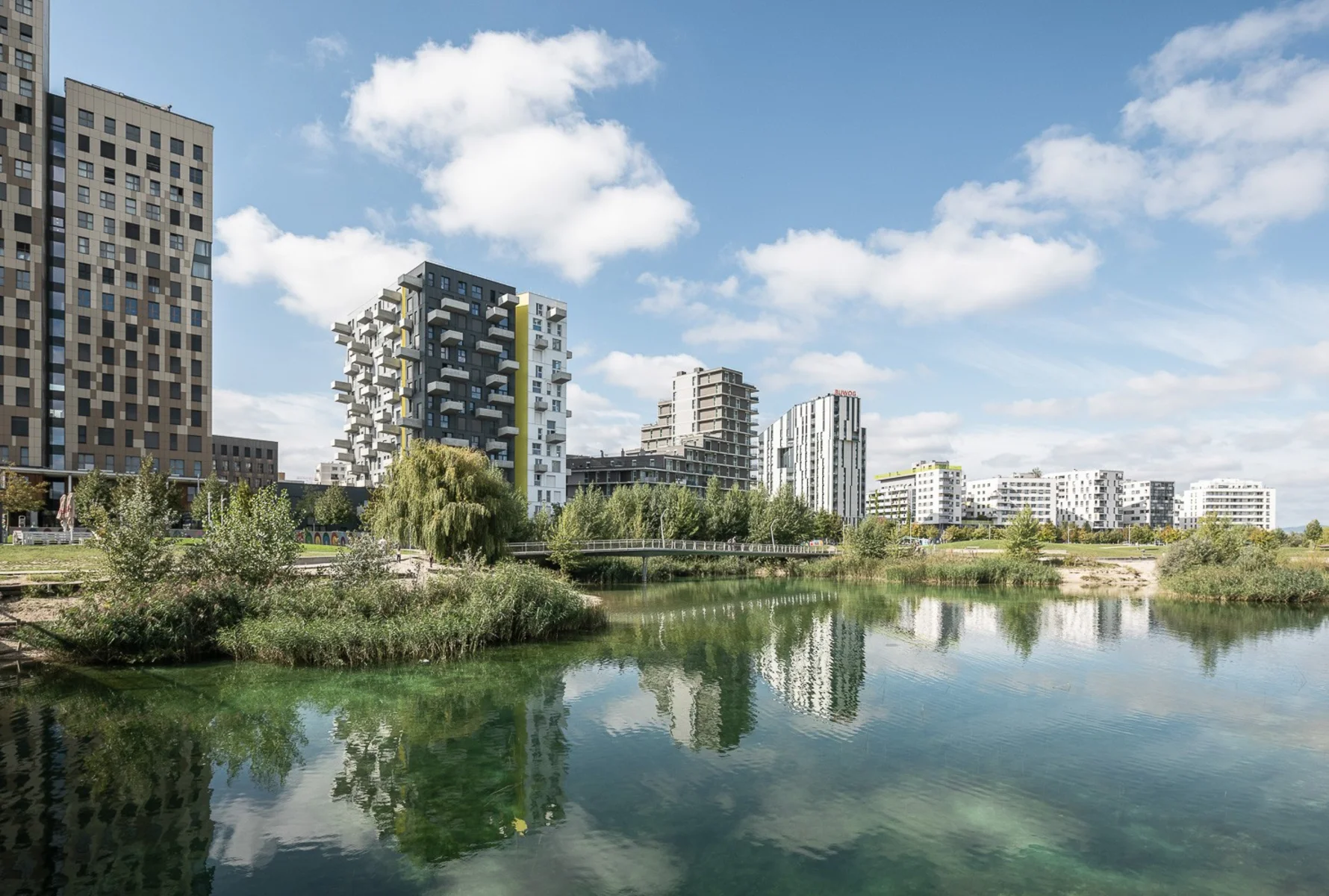
Sustainability is central to aspern Seestadt, guided by the “aspern klimafit” standard targeting a greenhouse gas-neutral living by 2040. The project emphasizes high-efficiency buildings, renewable energy, and circular economy practices such as recycling excavated lake material on-site to save 280,000 km in truck trips and 6,000 tons of CO2-emissions. Nearly 50% of the area consists of green spaces, applying the “sponge city” principle to manage stormwater, reduce heat, and enhance liveability.
Smart City
aspern Seestadt leverages cutting-edge digital tools for planning and management. Planners use a geospatial digital twin, built with GIS technology (ArcGIS Urban) and integrated into a data hub, to visualize the project, integrate data, and make informed decisions on energy efficiency and climate goals. This digital twin acts as a collaborative platform for all stakeholders, allowing for real-time updates and long-term monitoring of sustainability targets, transforming traditional project management into a dynamic, data-driven process.
Human-Centric
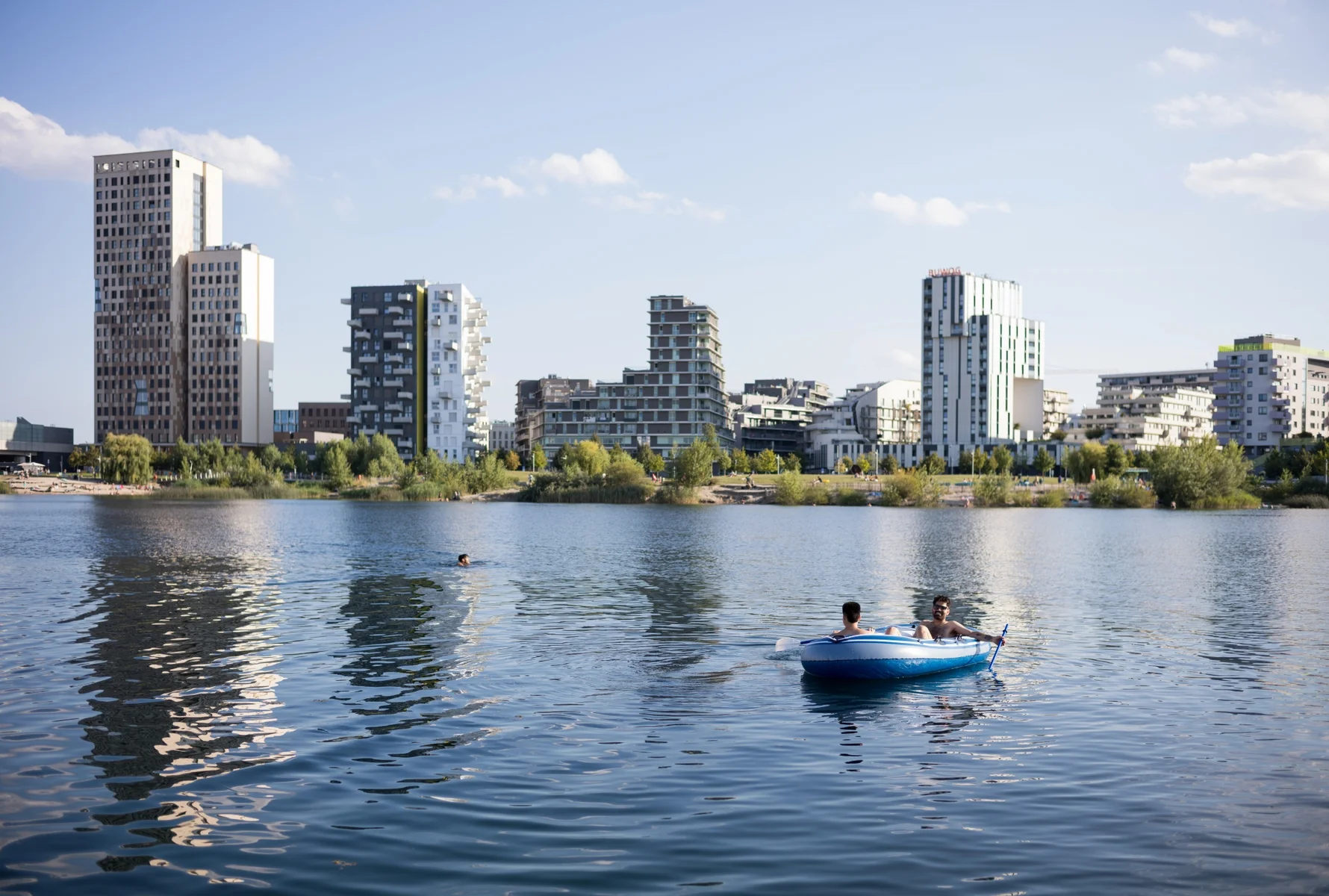
The district is meticulously designed to prioritize people’s well-being and foster a strong sense of community. From the beginning the Wien 3420 aspern Development AG aimed at a 40-40-20 transportation modal split: 40% public transit, 40% walking and cycling, and only 20% for personal motorized vehicles, supported by the early construction of two U2 metro stations and extensive bike paths. Having already achieved 19% motorized individual traffic, the new goal is to reduce this to only 15%. Around half of the district is reserved for open space. Even today, with approx. half of the district developed, 19.5 hectares are dedicated solely to the lake and the first five parks. These intelligently planned open spaces create a balanced life, right in the city and yet surrounded by greenery. The lake is the heart of Seestadt and makes it the unique interplay of urban life and nature tangible.